NeU/X
An AI co-pilot that turns creator goals into actionable plans.
Self-directed capstone project. AI research, Figma prototype, React final build in Visual Studio with Claude Code.
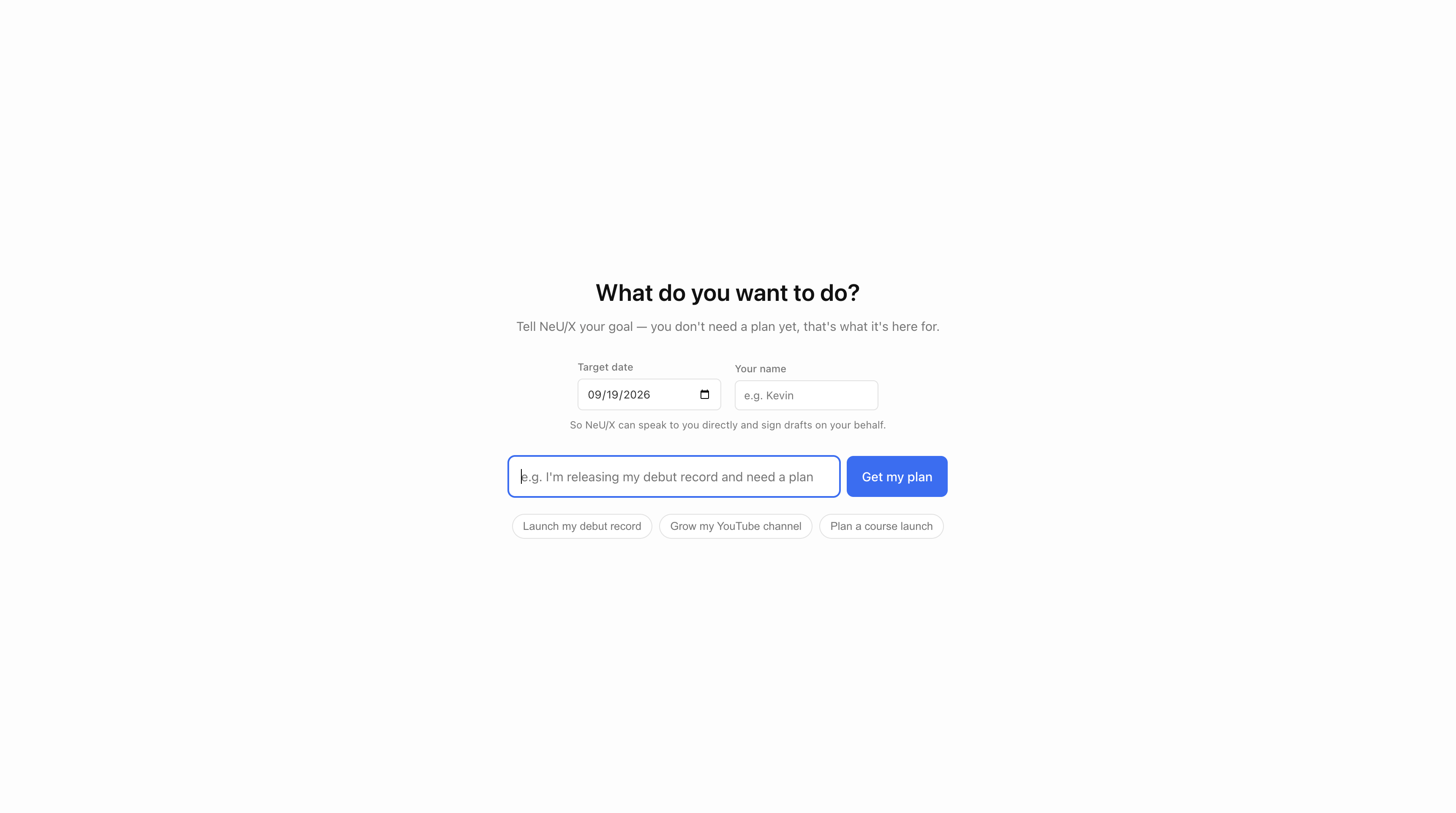
NeU/X started years ago as a side idea: automate some of the repetitive UX work behind product conversion funnels. It sat mostly dormant until a UX-of-AI-products certificate class gave it a real second life — feedback from my instructor rekindled it into what NeU/X is now.
The core insight: there's a non-agentic, non-LLM way to programmatically derive a UX affordance recipe by working backward from a goal state. Ask what the goal looks like. Ask how many milestones it takes to get there. Inside a small, constrained product space, that's a straightforward calculation, not a judgment call.
The premise, half-joking but genuinely the point: build something that makes myself obsolete. If a creator could specify a goal — launching a record, say — and NeU/X could programmatically calculate and manage the milestones to get there (email campaigns, social outreach, press contacts, whatever the goal actually requires), that's success.
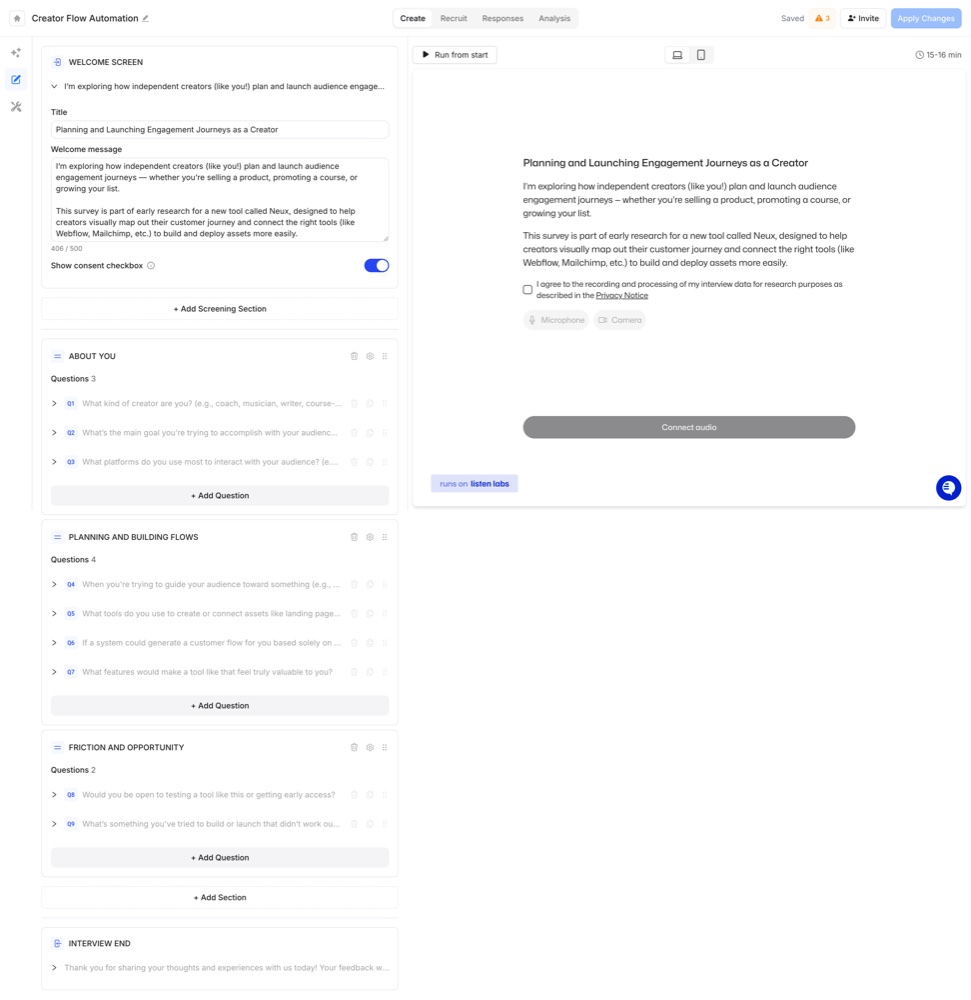
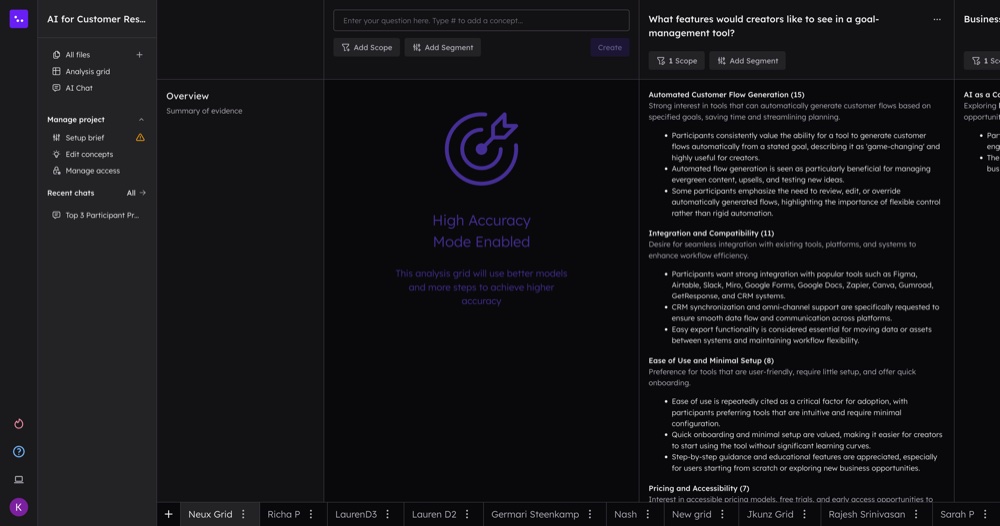
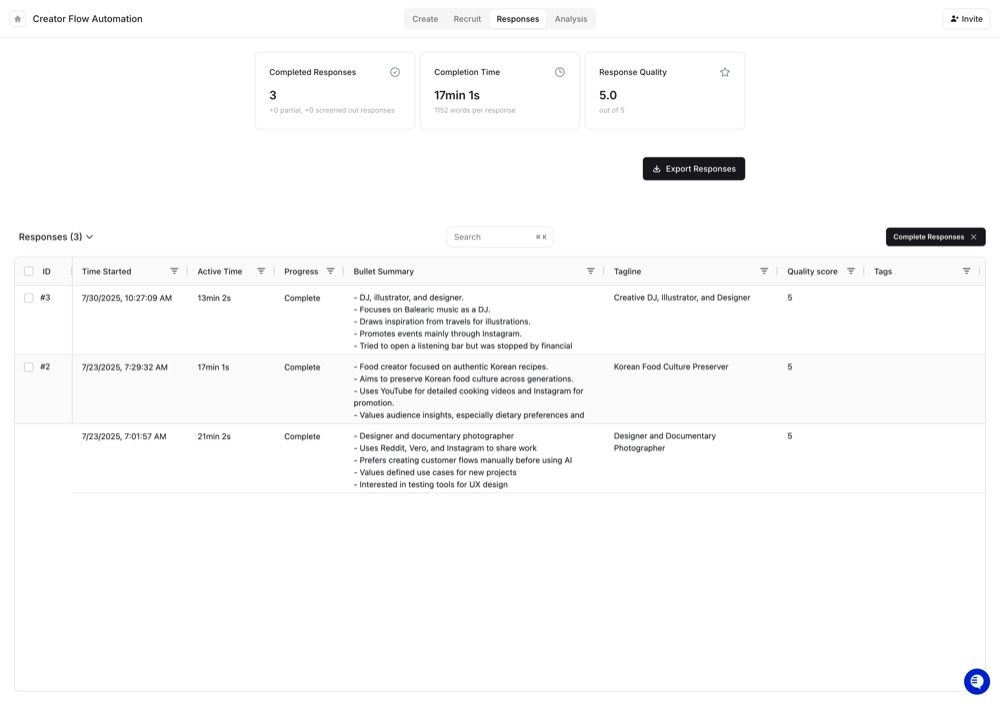
Research ran through Listen Labs: a screener survey scoped participants by creator type, then AI-moderated interview sessions ran on their own. I was taking an AI-for-product-research class at the same time, so I had access to real tools for this — CoLoop and Hey Marvin processed and extracted themes, trends, and product opportunities from the sessions.
Honestly: 3 of the participants were real classmates who responded to a survey. To round out the data pool, I invented 17 more. The point wasn't a defensible sample size — it was learning to run the tools and the synthesis process end to end.
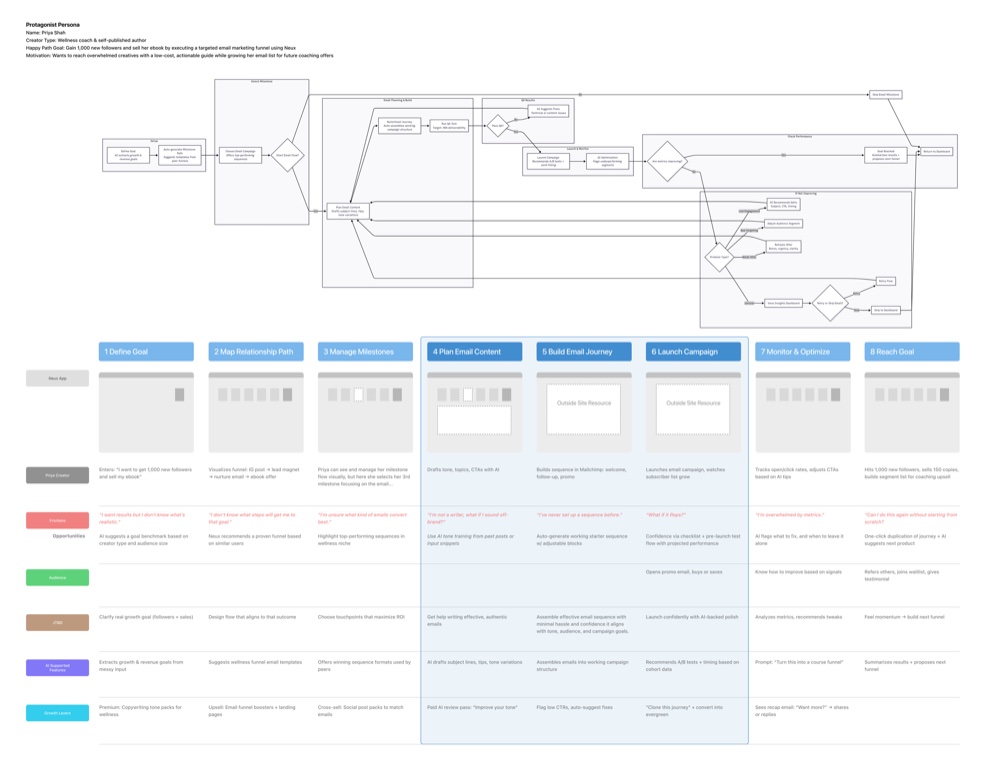
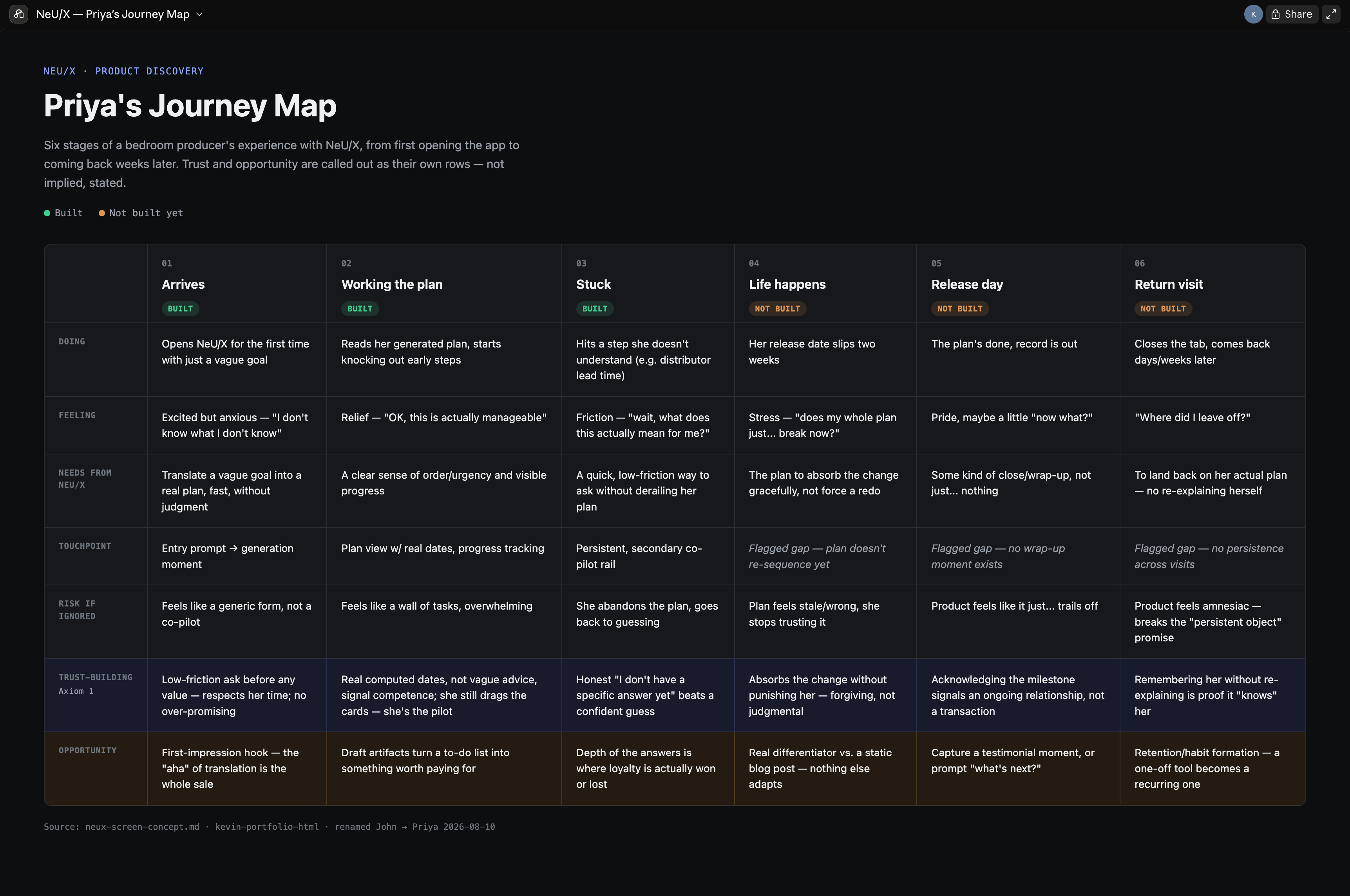
That research pointed toward a journey map for Priya, a creator planning to launch and sell a book, and specifically toward email campaign management as her sharpest immediate need. I can't currently trace that conclusion back to a specific line in the interview data — it's a judgment call I made off the synthesized research, not a directly cited finding.
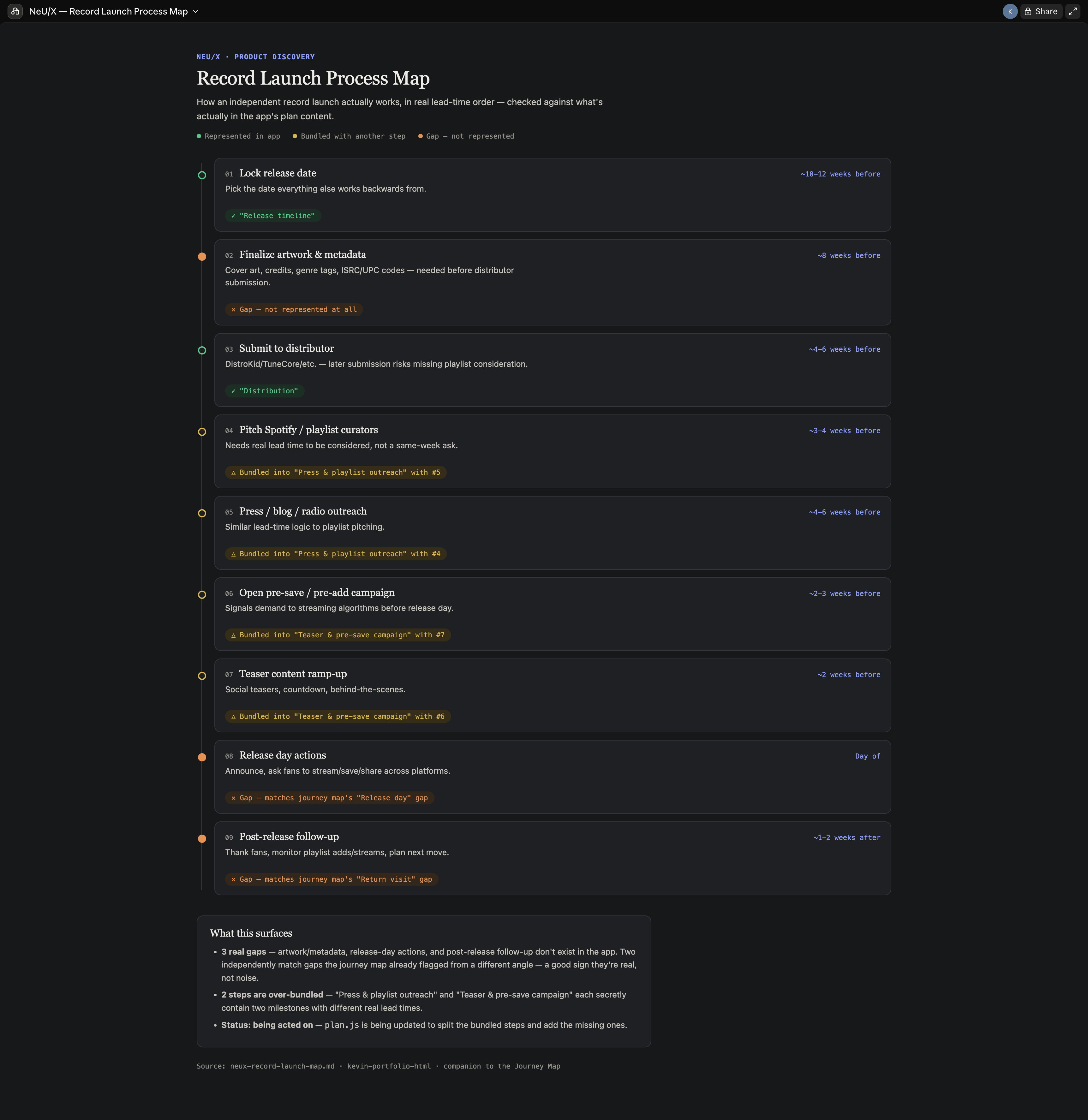
That research came together as two artifacts: a full journey map for Priya, the primary persona, and a record launch process map showing how her release workflow actually breaks down step by step.
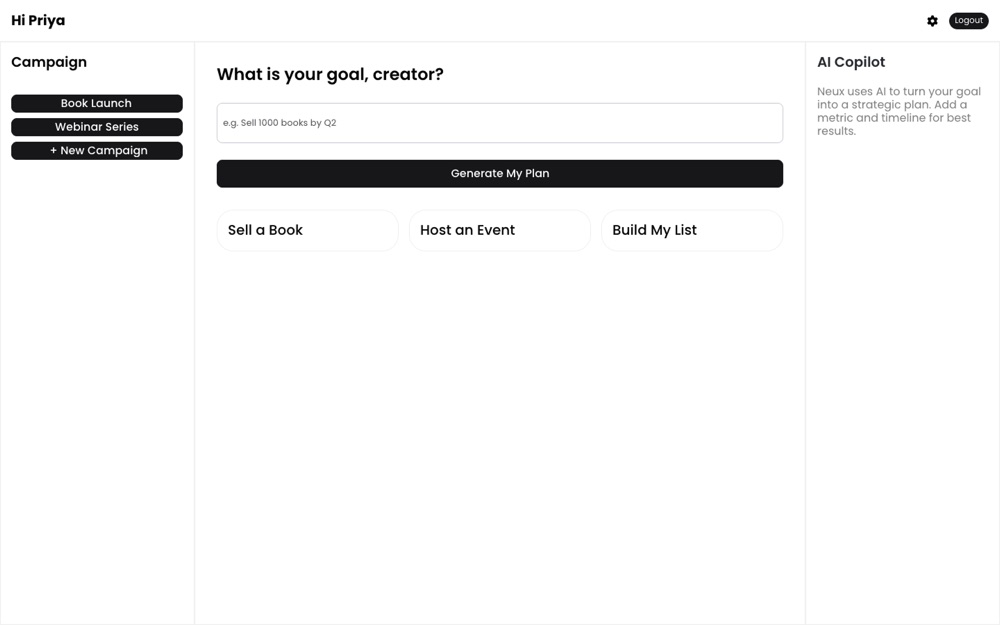
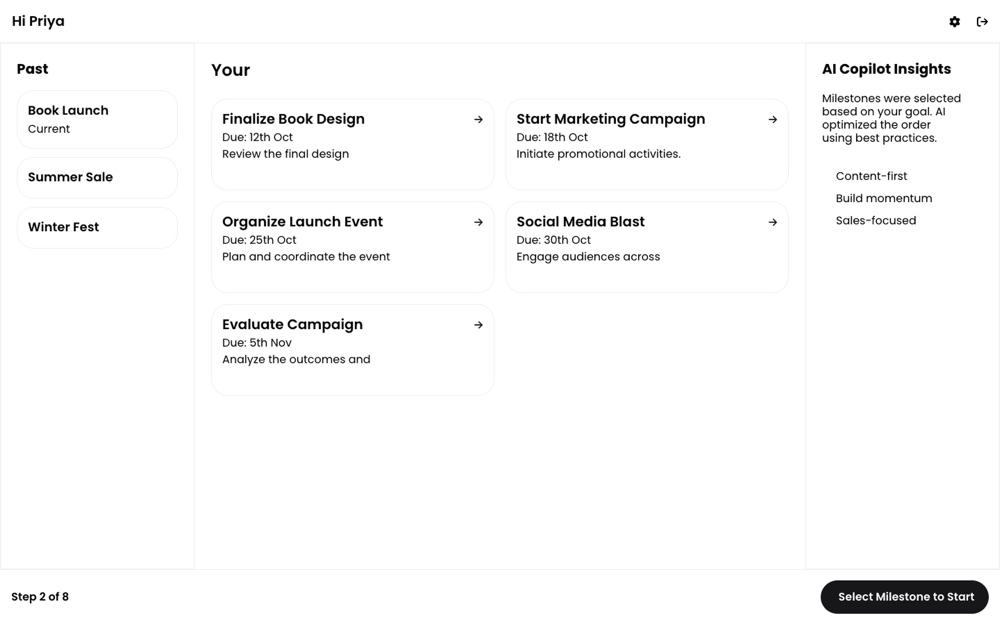
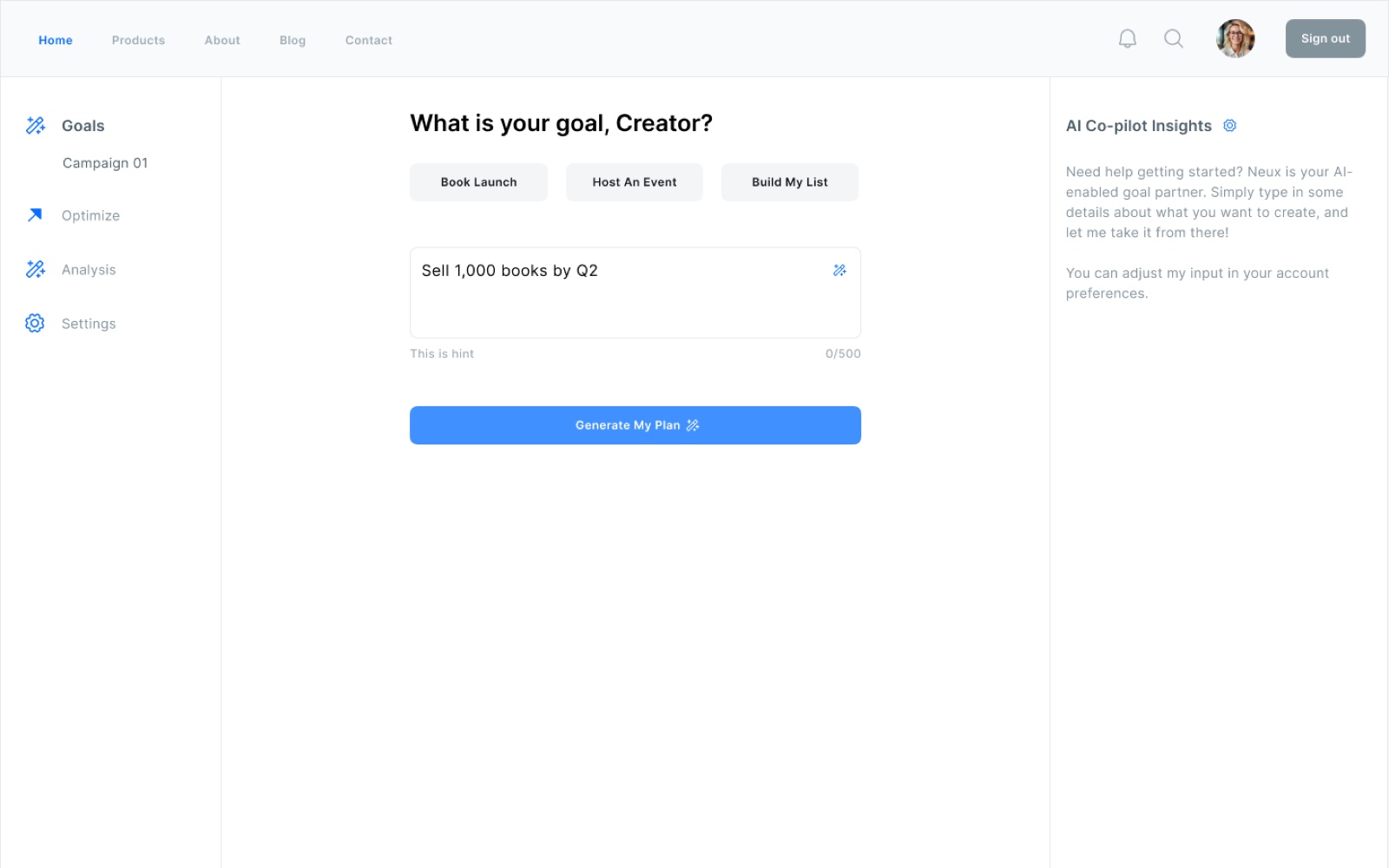
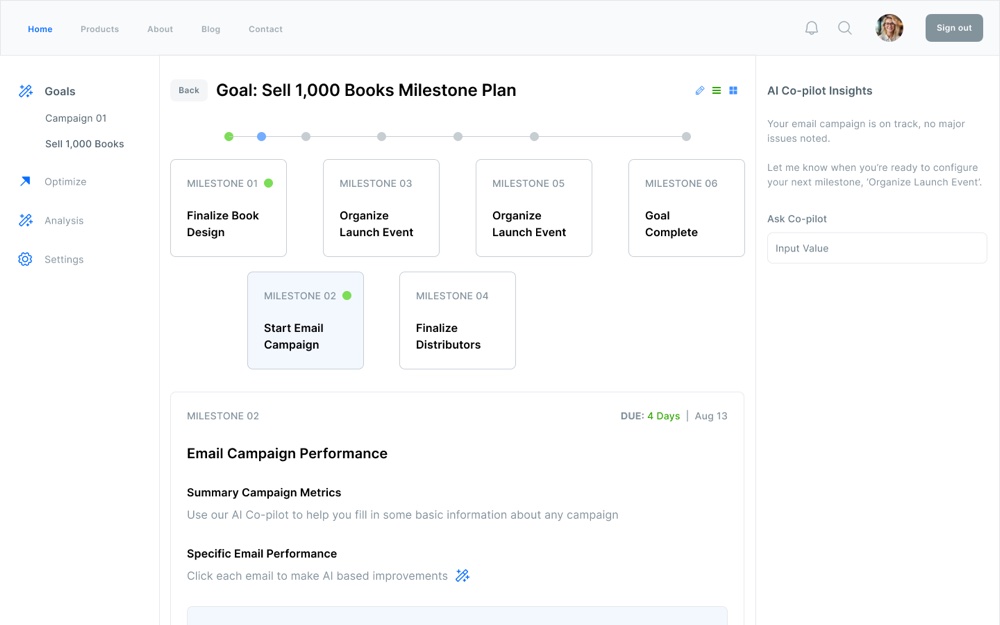
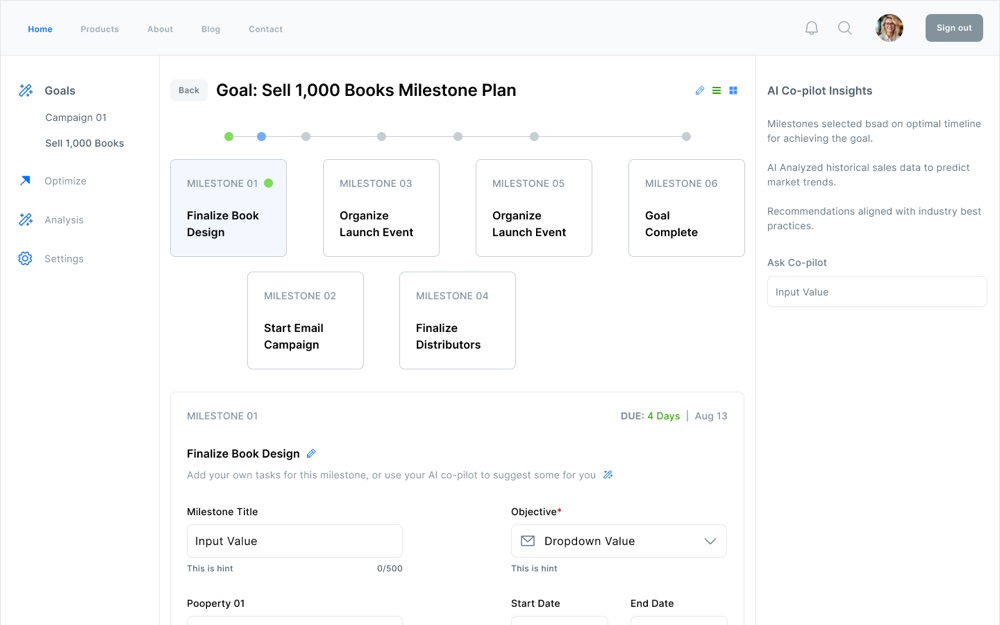
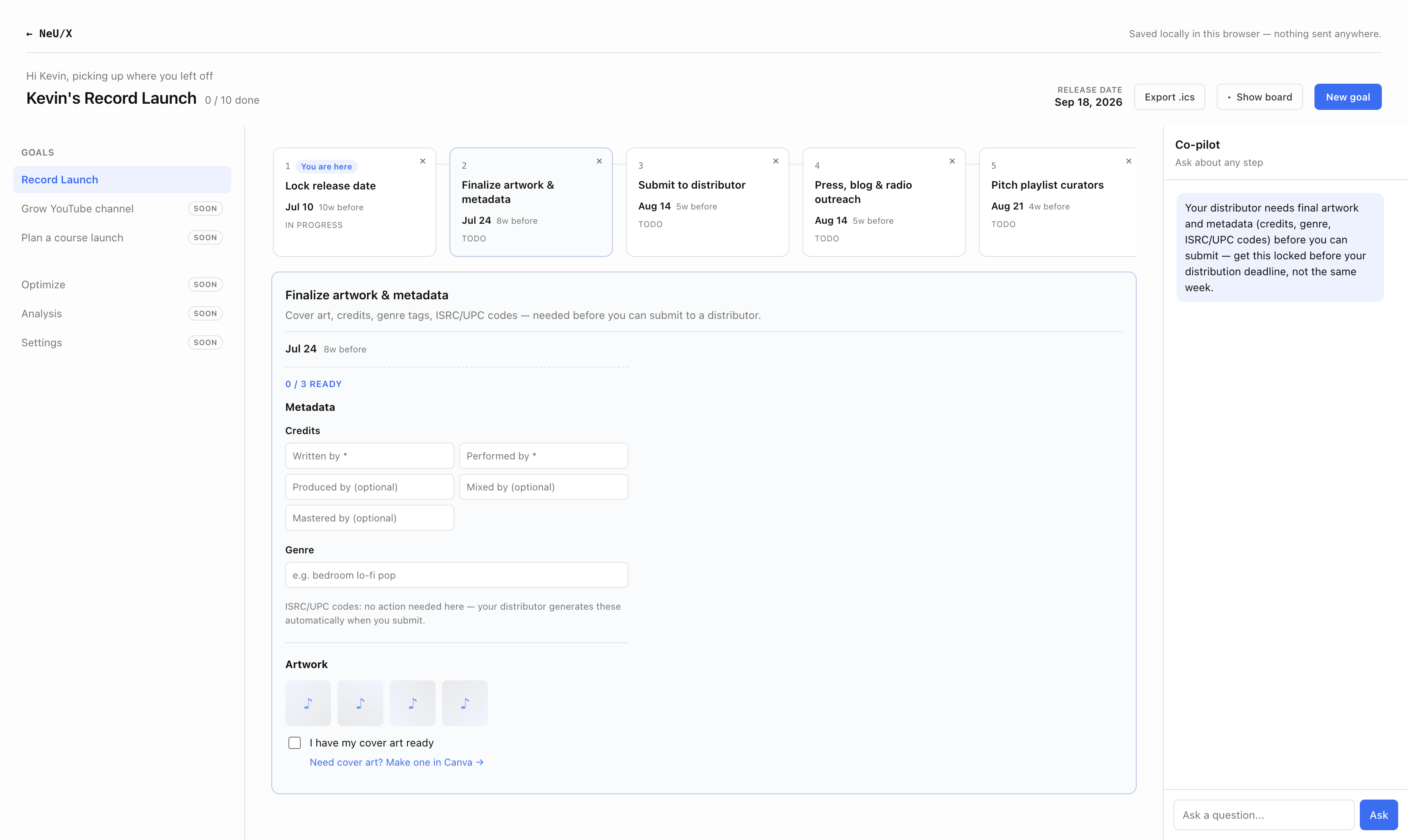
Early screens were roughed out in Uizard as low-fidelity black-and-white wireframes, working out the goal-to-milestone flow before any real design. From there it moved into Figma, about 10 screens, linked into a clickable prototype, scoped narrowly to Priya's book launch and her email campaign in particular.
The AI co-pilot panel went through several passes on what it should actually say at each milestone, from a blank prompt to specific, contextual insight tied to what the creator had just done.
That's where it stayed — a class capstone, proof of concept, parked for about a month once the class ended.
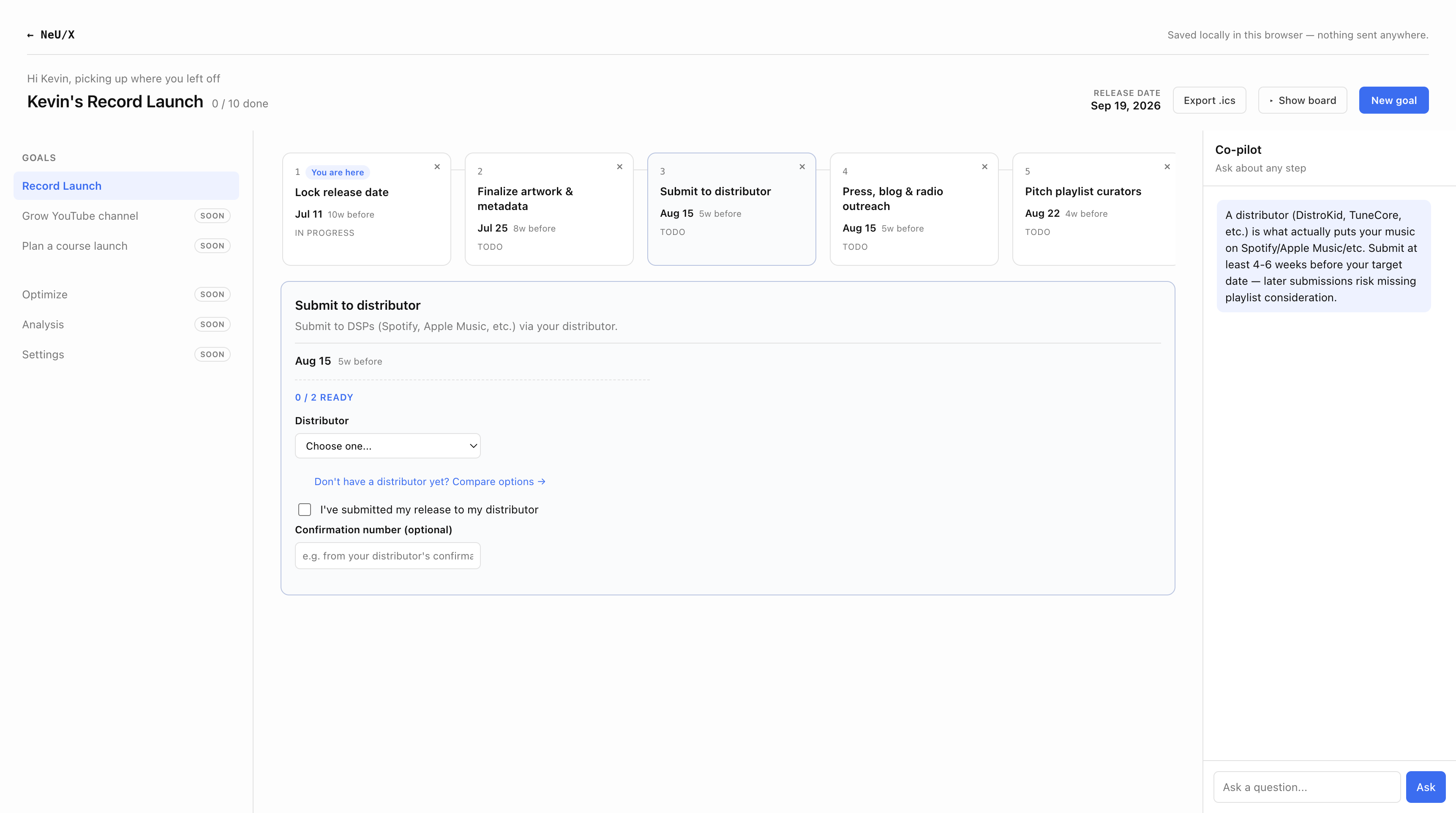
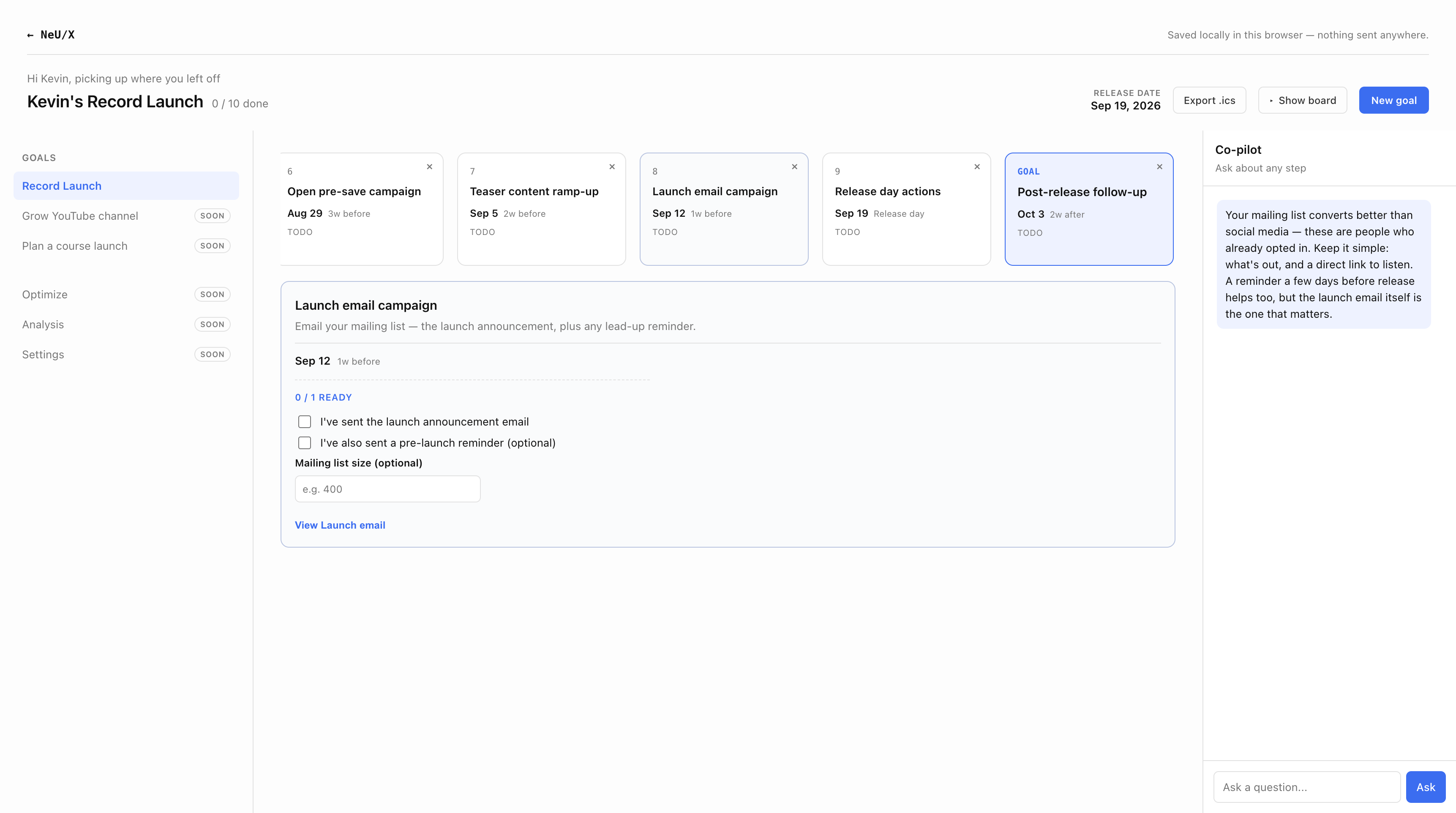
Picked back up about a month later and rebuilt in React, to better mimic a real application than Figma ever could. The rebuild also expanded the scope: about 10 milestones now, not one flat email-campaign step — email campaign management is still in there, but as one milestone among several, not the whole product.
The journey map validated the mechanic against one goal: a book launch. The React rebuild demonstrates it against a different one: a record deal. The milestones change; the underlying goal-to-plan logic doesn't — which is closer to the actual point of the project than either example on its own.
A React-based milestone dashboard walks creators from goal to release, breaking the plan into concrete steps and surfacing an AI co-pilot that responds to whatever step they're on — not a generic assistant, but one reading the actual state of their plan.
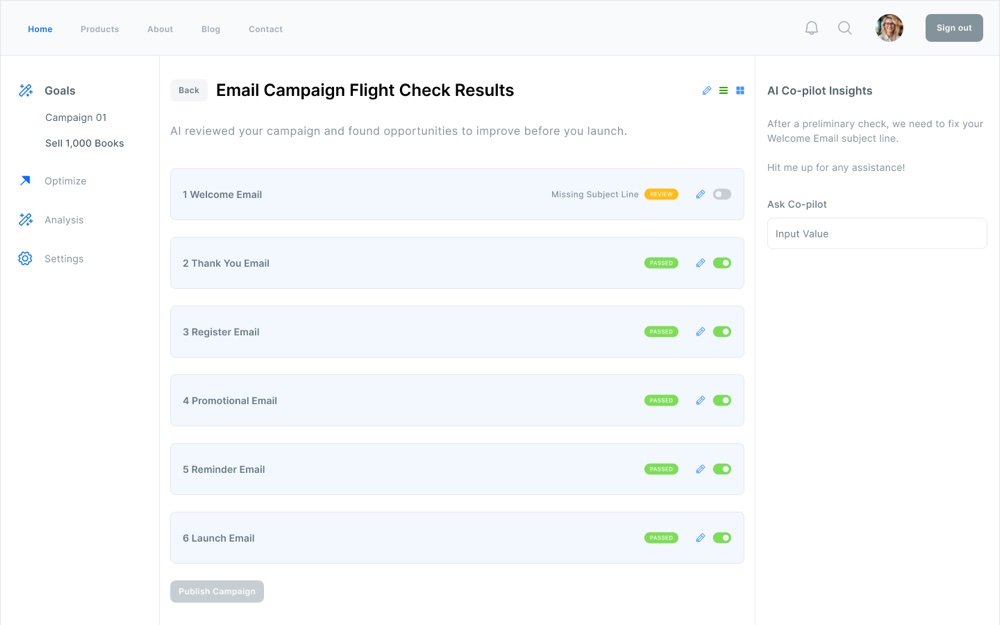
On the email side, a campaign flight check reviews subject lines, metadata, and send timing before anything goes out, catching the mistakes that are easy to miss when you're moving fast on launch day.
The real outcome was what this taught me about finding product-market fit: how to gather real evidence a problem exists and where the actual opportunity sits, before designing a single screen — including learning to be honest with myself about where that evidence was thin.
NeU/X today is a working React prototype, as complete as it needs to be for what it's actually demonstrating: a goal-state-to-milestone mechanism that generalizes across different creator goals, not one hardcoded to a single scenario. That's the actual business value underneath a capstone project — a repeatable way to turn any stated goal into a concrete, manageable plan, not just a tool for one creator's one launch.
- Capstone
- AI Product
- Figma → Code