Opportunity Radar
An n8n flow which finds companies likely to be hiring before roles are even posted: a live dashboard ranking hiring momentum by tracking signal strength across news, Reddit, LinkedIn, GitHub, Hacker News, funding, and exec hires in real time.
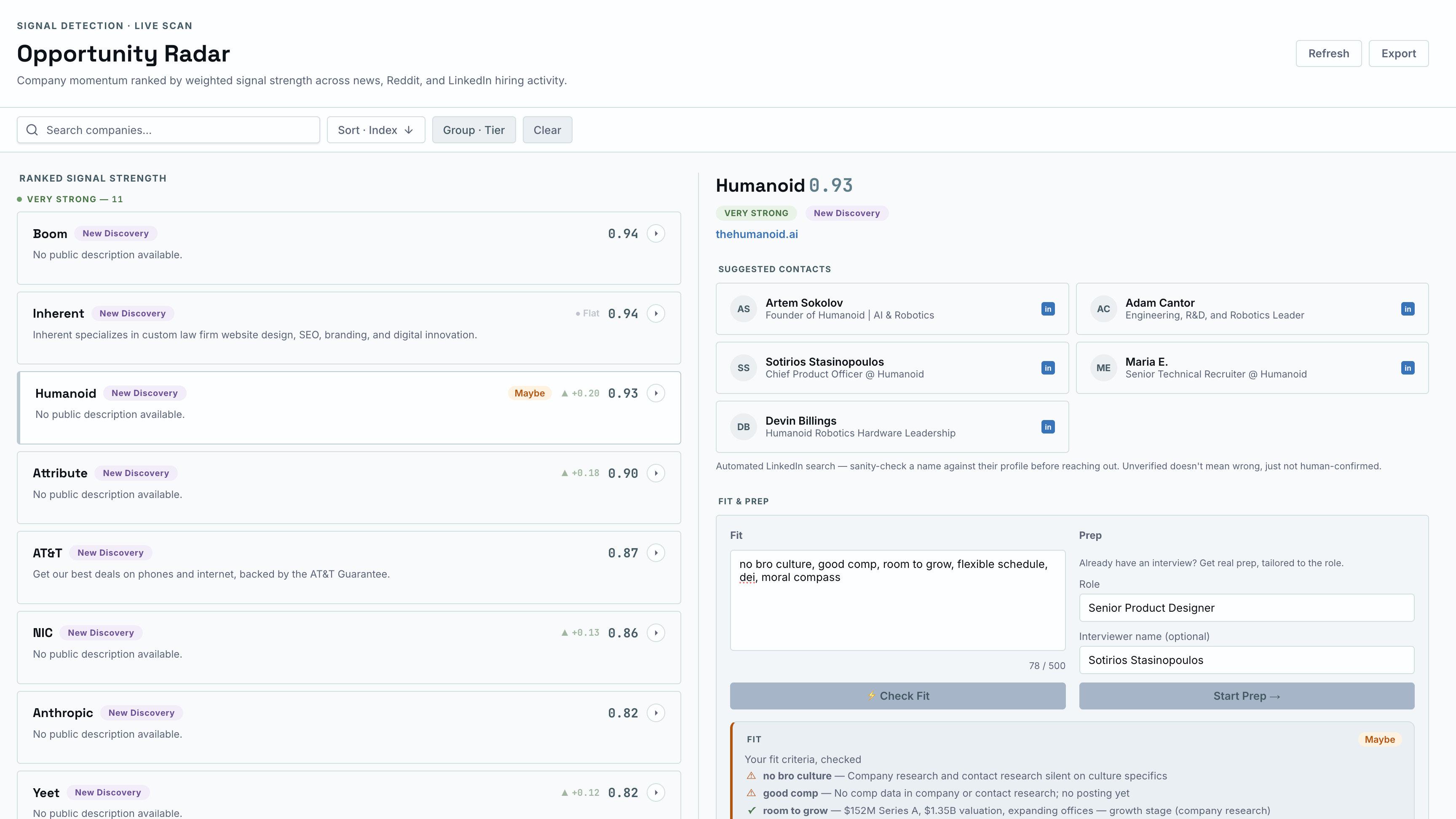
Fit, Prep, and Close, all running on one selected company.
Started in a coffee shop, mid job search: the idea that hiring leaves a trail, and enough signals lining up means a job exists before it's posted.
v1.0 was two days of vibe-coding in ChatGPT, sparked by an instructor's passing mention of n8n — what came out only populated a spreadsheet with company names, no interface.
A favorable reply on LinkedIn was the real validation.
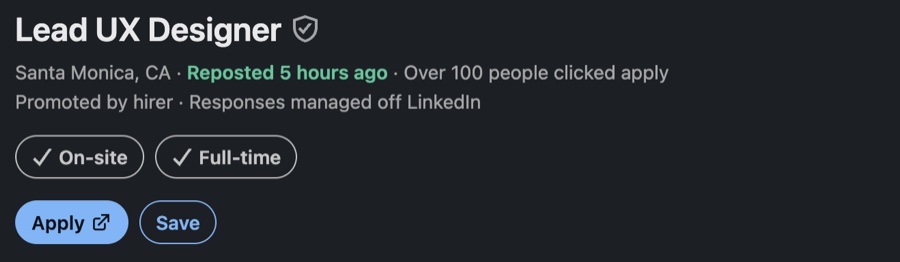
The friction that started it: over 100 applicants before most people even see the posting.
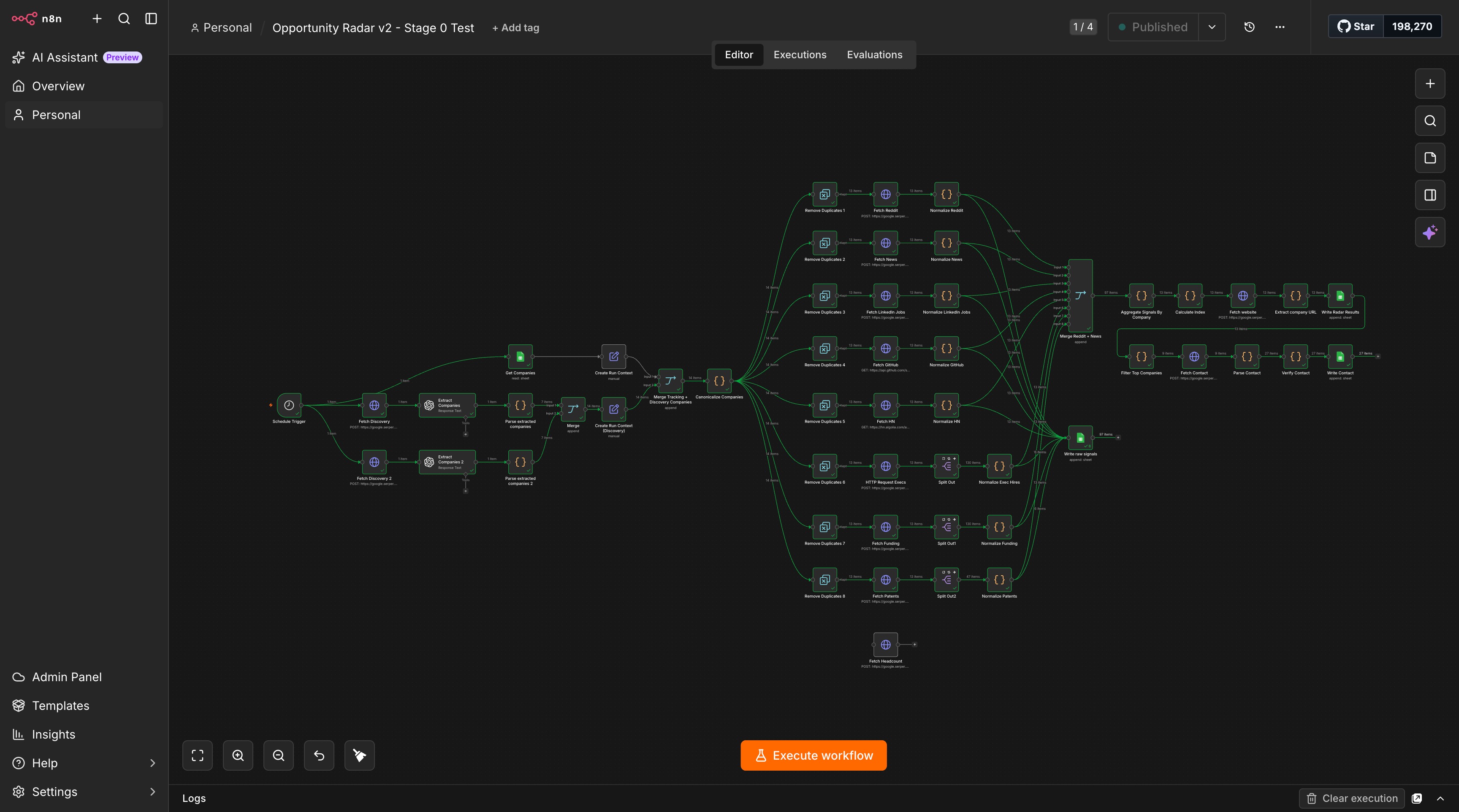
Built in the coffee shop: eight signal sources merged, deduped, and scored per company.
The favorable reply meant it was worth revisiting — v2.0 added more signal sources and rebuilt the pipeline simpler.
I'd just started working with Claude instead of ChatGPT, and exported the n8n workflow's JSON for it to derive the project's actual function and goals.
It then sketched a first UI pass in Figma, through an MCP connection I'd set up earlier.
One of Claude's early suggestions was a radar-style view of the ranked opportunities — that's where the name came from.
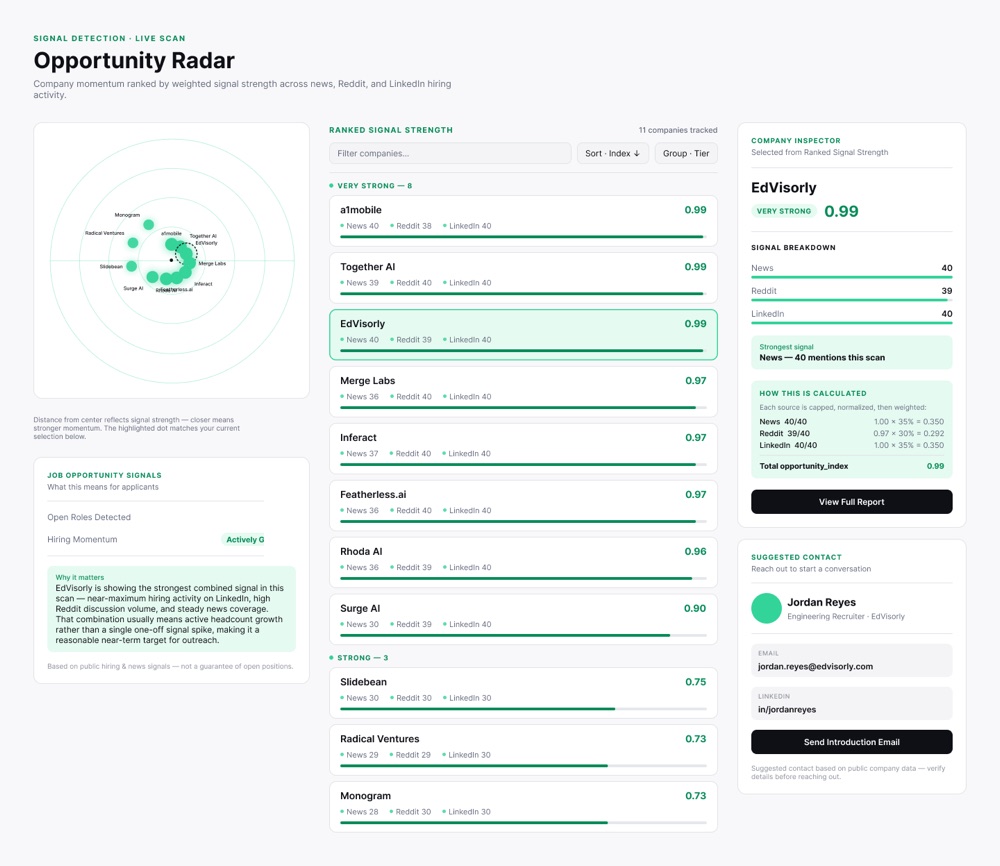
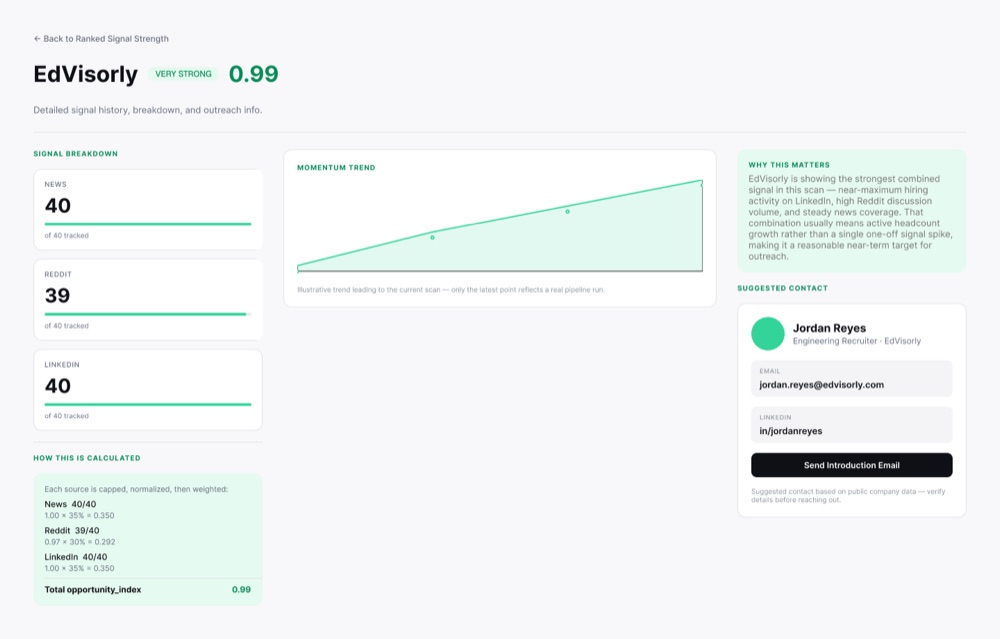
A short stretch in Figma made clear the DOM itself was the faster loop, so Figma got abandoned from there on.
One exception: once the CSS had matured, I derived a style guide from what already existed.
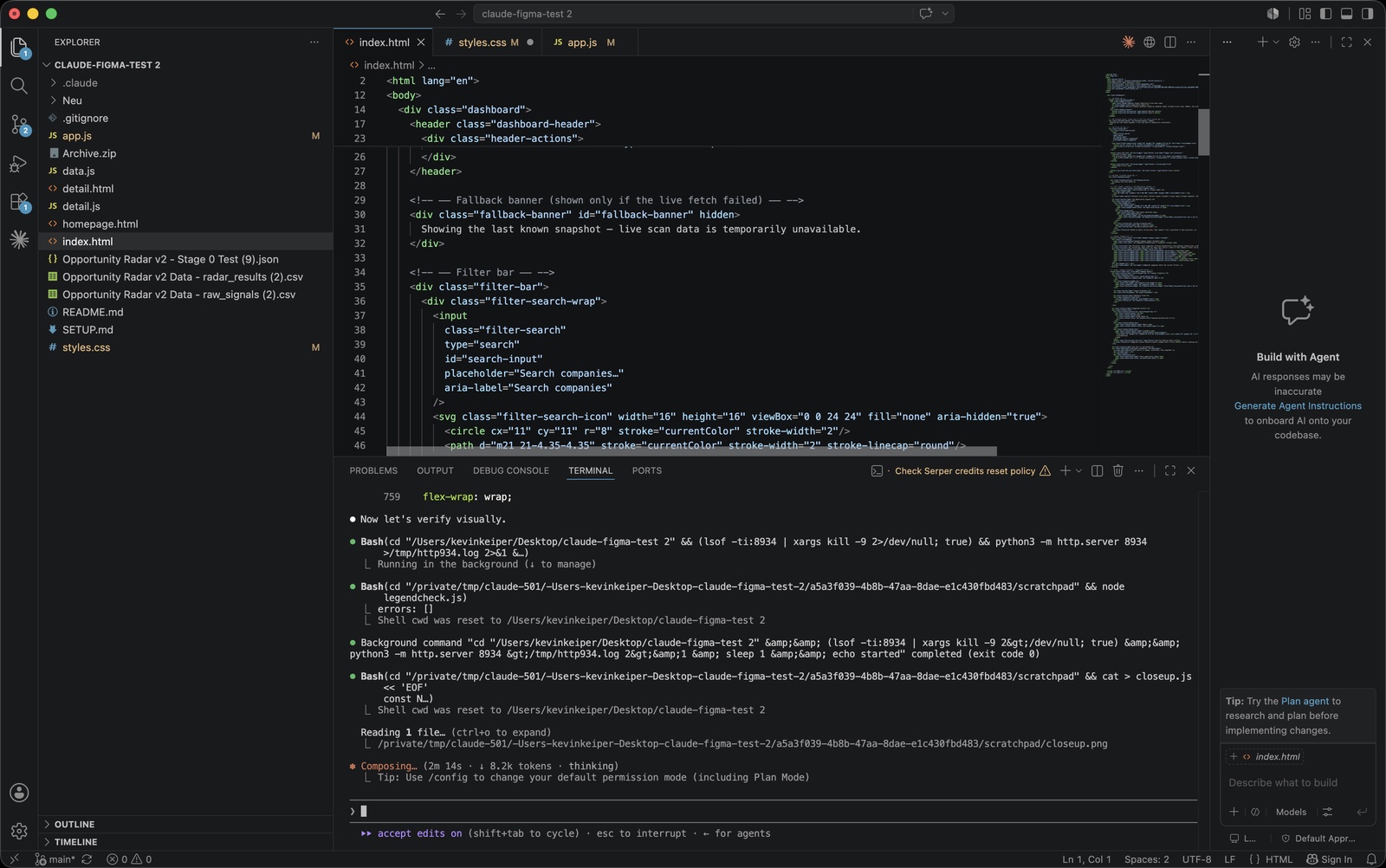
Interface built directly in the DOM, against the live data schema, with an AI agent as co-pilot.
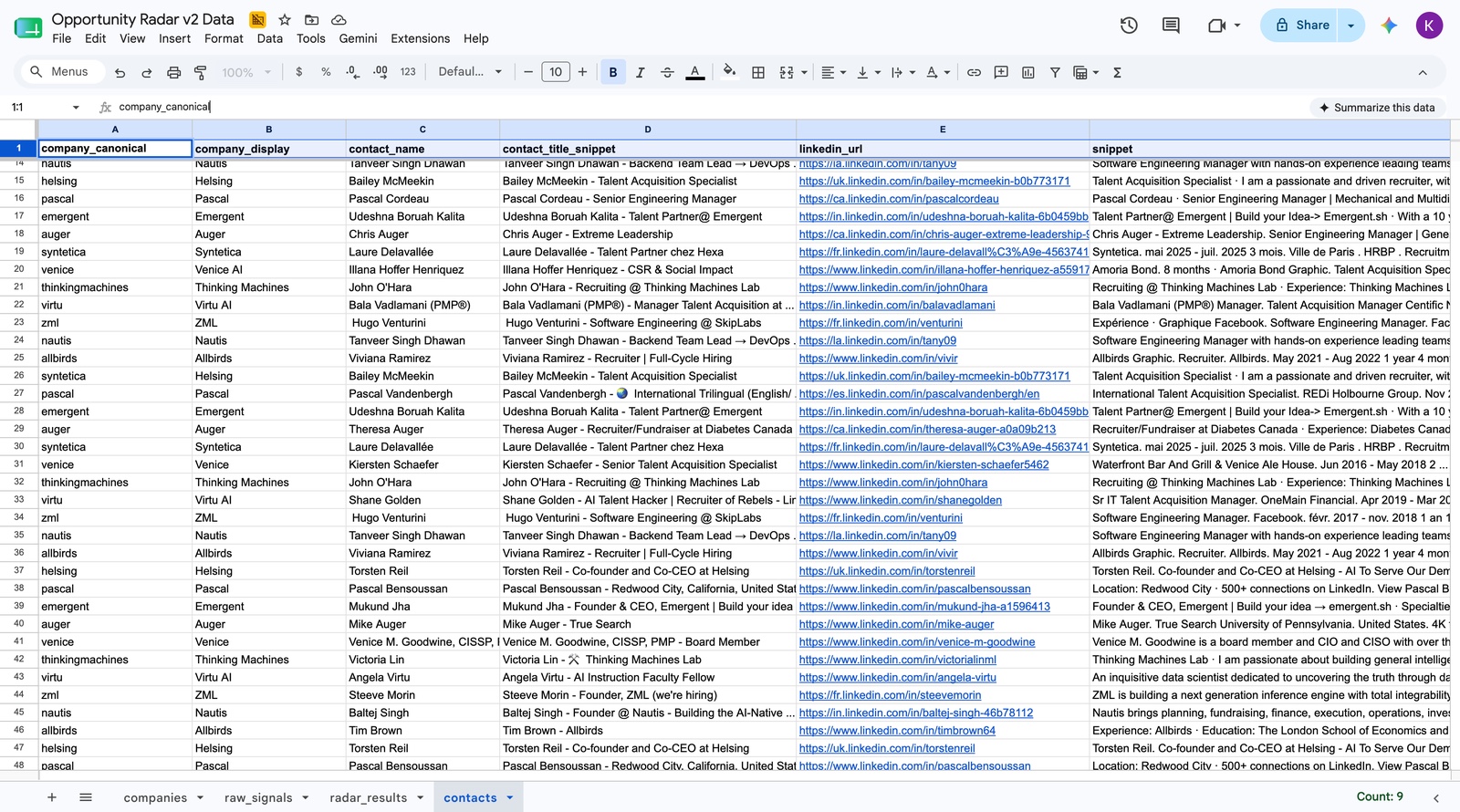
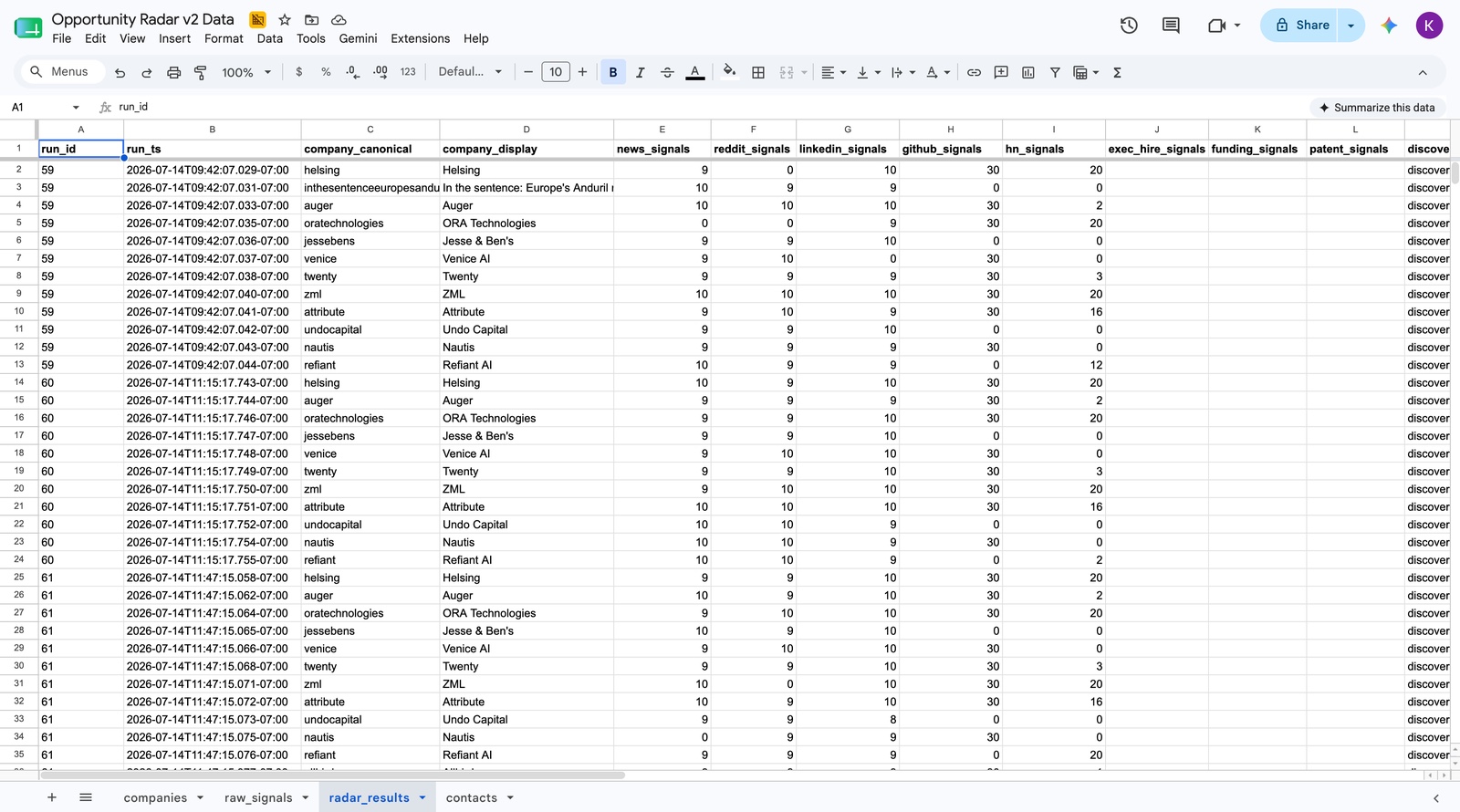
I kept seeing project .md documents treated as essential scaffolding by people further along than me — I didn't know what most of them actually were, so I took a short class and wrote a handful mid-build, not before.
The genuinely frustrating part: realizing, halfway down a rabbit hole, that a grounding doc written earlier would have kept me out of it.
Not a tooling problem — my own gap in knowing which guardrails a project like this needs before it needs them.
Partway through, I wasn't sure if Opportunity Radar was an agent, so I derived three tests: could you write the rule down, is a simpler tool capable, would two competent people disagree given identical input.
Run against itself, the answer was no on all three — a real, useful pipeline, no genuine judgment call anywhere in it.
That's also where Fit, Prep, and Close came from — the judgment calls I'd been trying to bake into this project, split off once it was clear they were a genuinely different kind of thing.
A ranked leaderboard, a company inspector with momentum trends and contacts, and a per-company breakdown of how each score was calculated — the ranking is legible, not a black box.
Fit, Prep, and Close run in situ, one company at a time, right in that same detail pane.
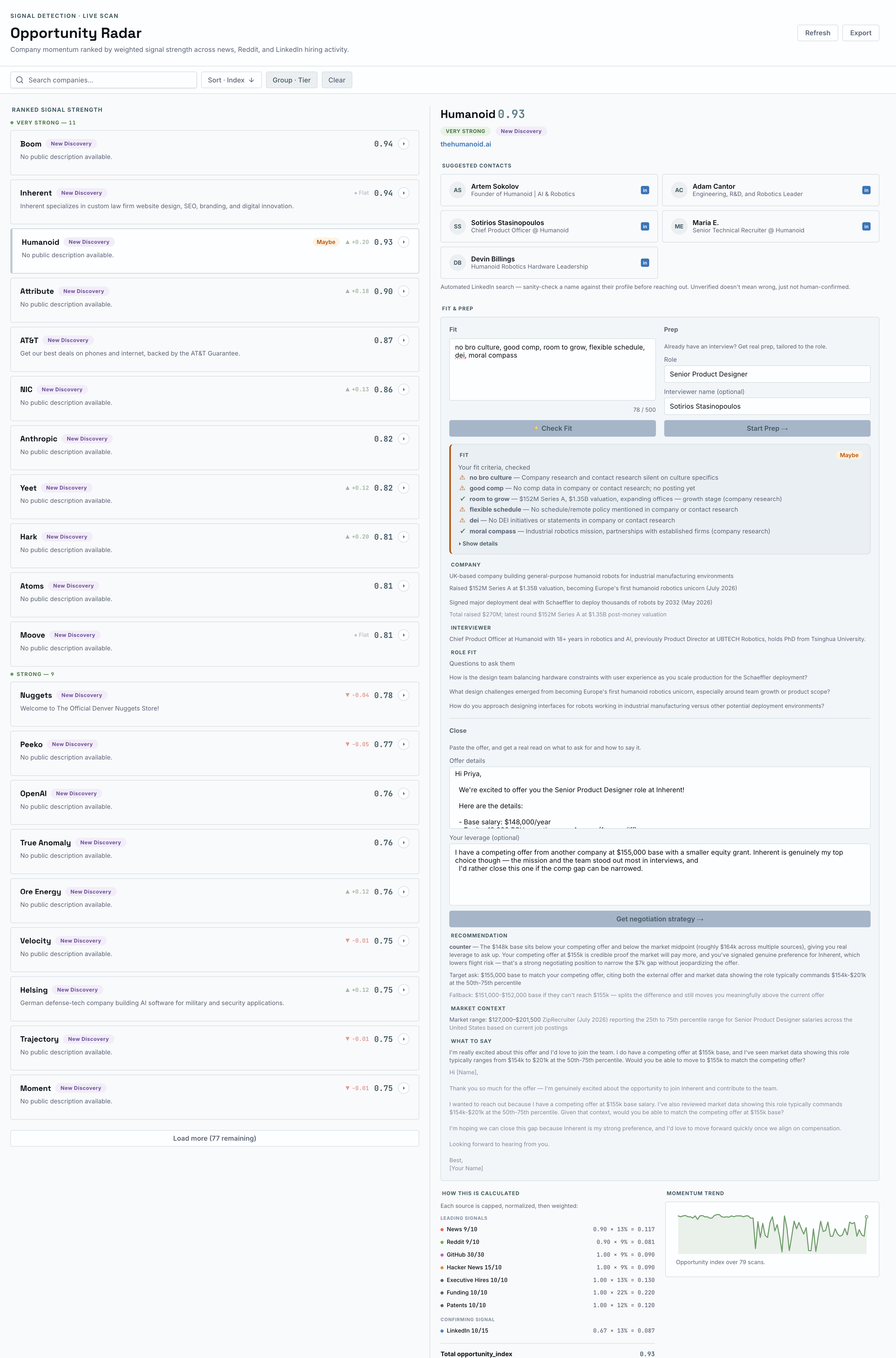
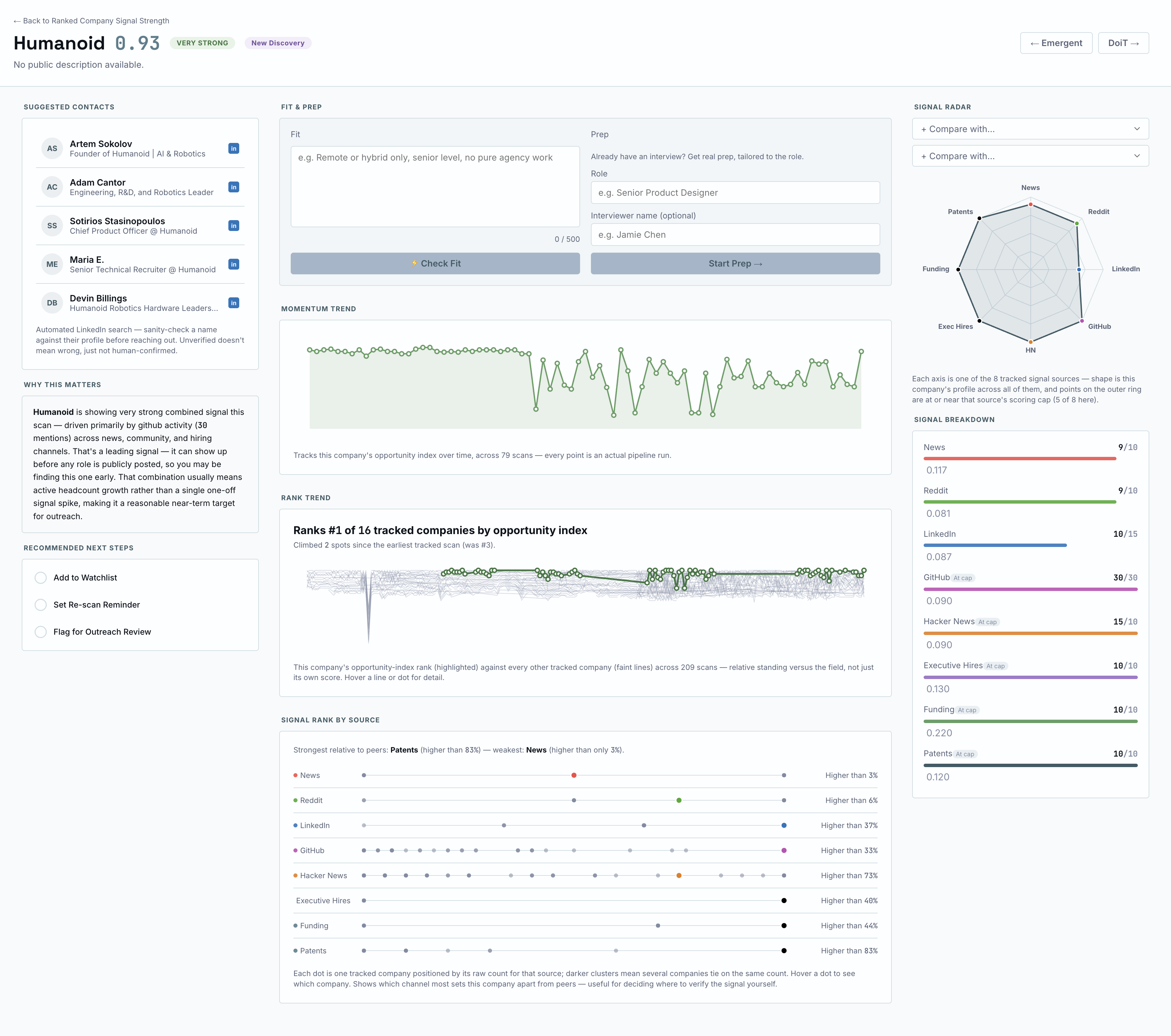
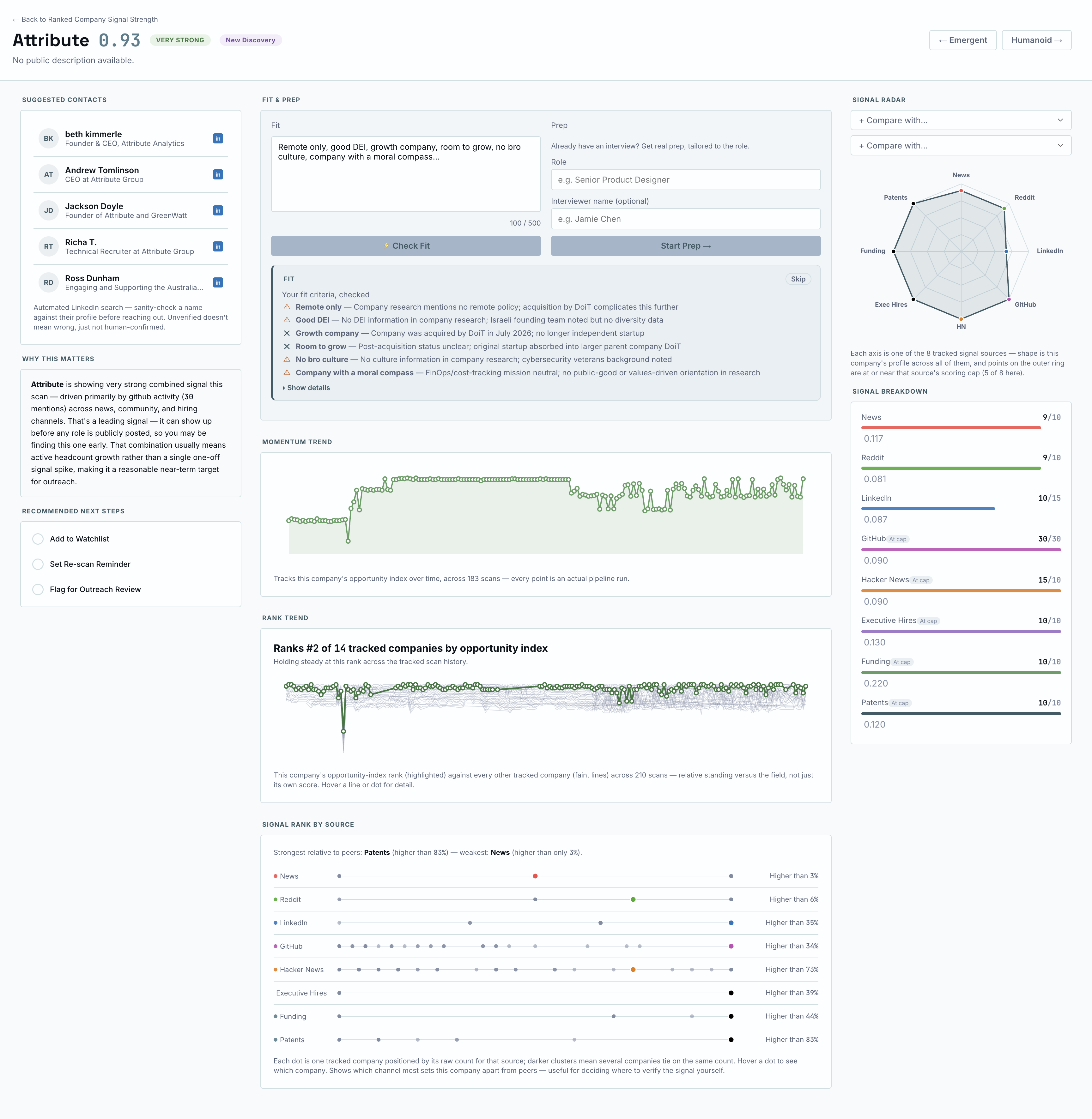
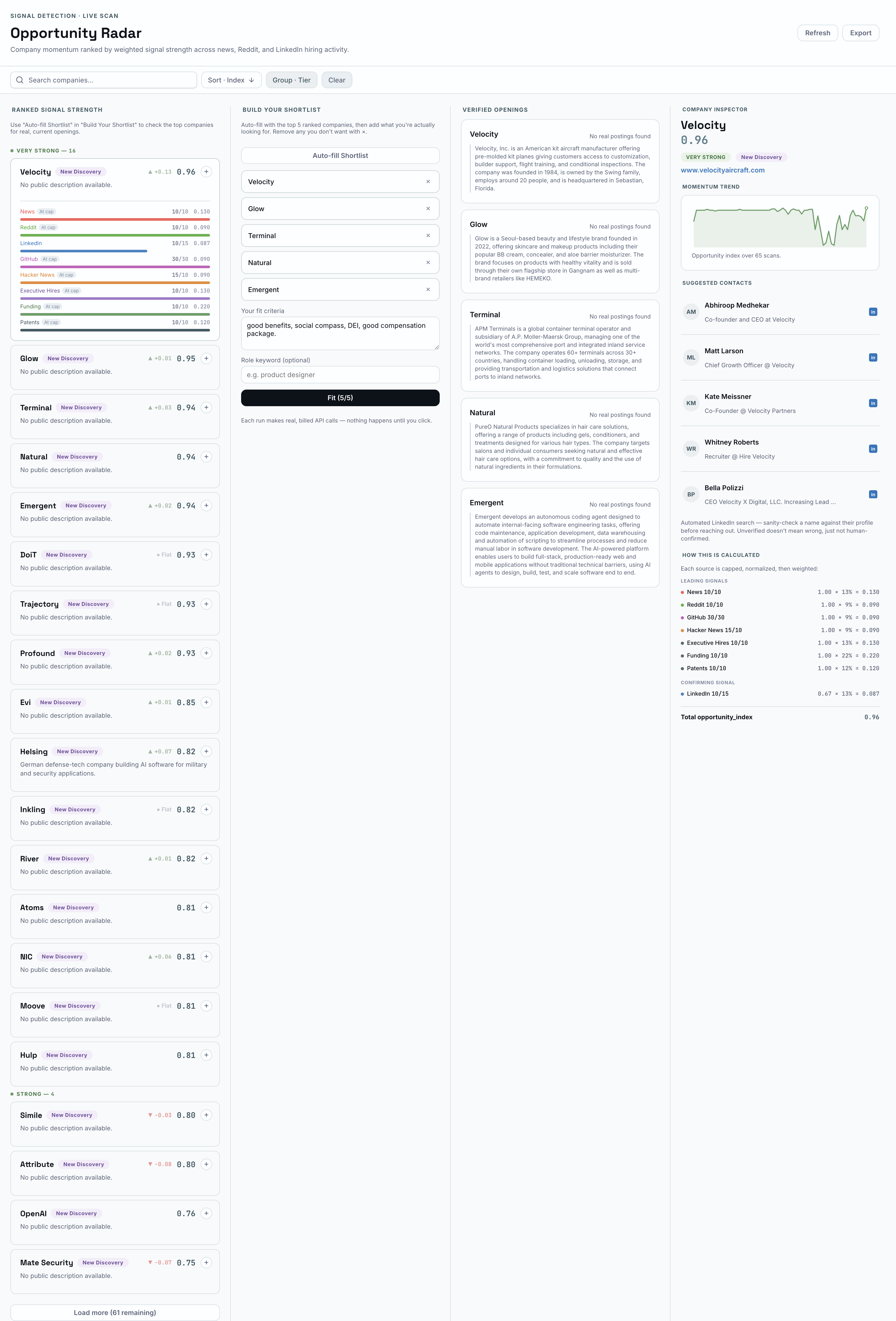
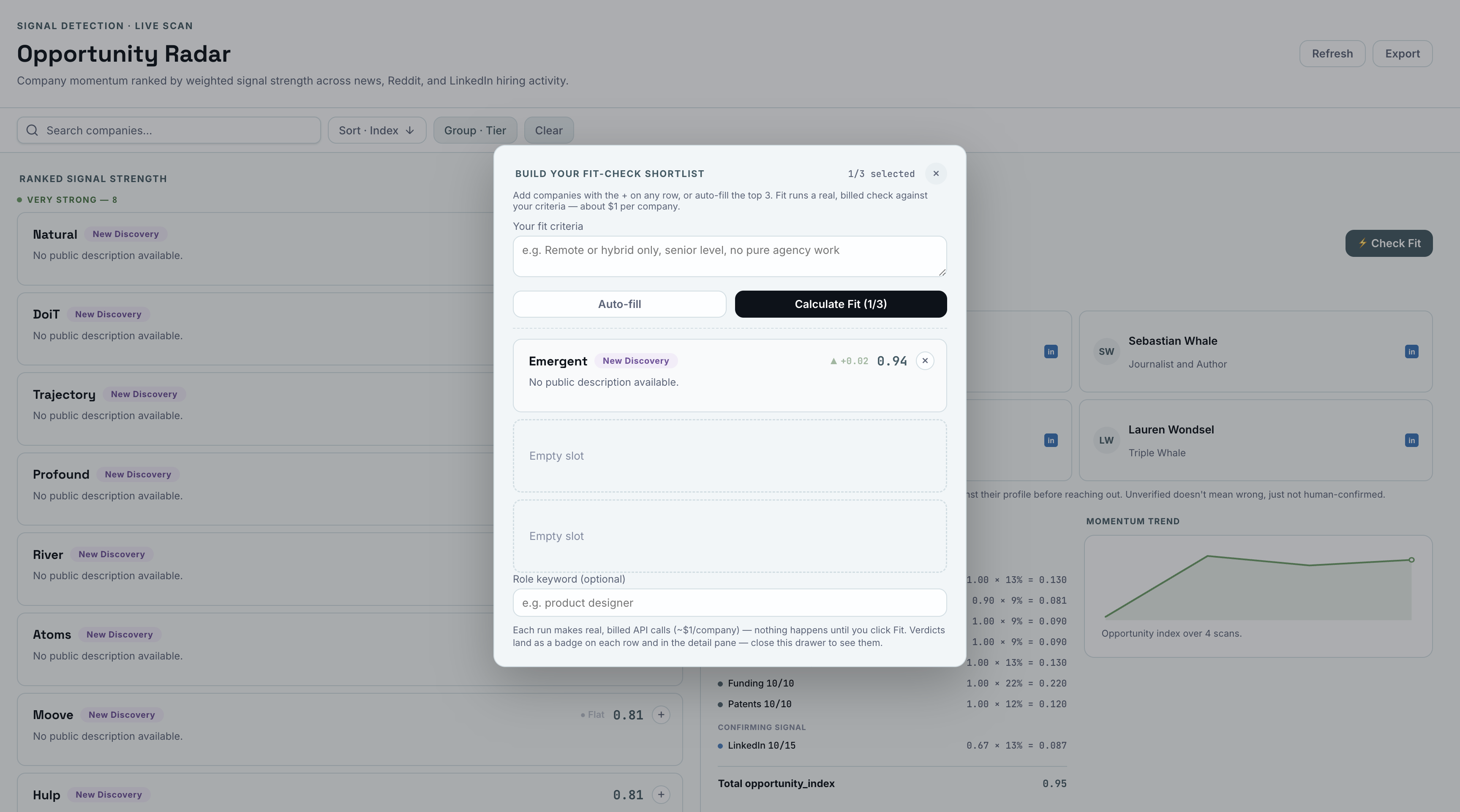
Live and in use: it's surfaced real companies with rising hiring momentum and the people worth reaching out to.
The real value isn't just a personal job-search tool — it's the instinct underneath: find the real signal, build the smallest system that surfaces it, stay honest about what it can't yet prove.
The dashboard surfaces real contacts per company, so it isn't posted publicly — get in touch for a walkthrough.
- Product Design
- n8n
- Live Product